
On October 9, 2026, Natural Resources Canada (NRCan) published the Volume 2 of the Case Studies on Climate Change in Flood Mapping from the Federal Flood Mapping Guidelines Series. The objective of this document is to help practitioners design and carry out a climate change assessment for flood hazard mapping and to highlight work that has been performed by flood mapping practitioners across the country to incorporate climate change into flood hazard studies. The full report is available at: https://natural-resources.canada.ca/science-data/science-research/natural-hazards/flood-mapping/case-studies-climate-change-flood-mapping.
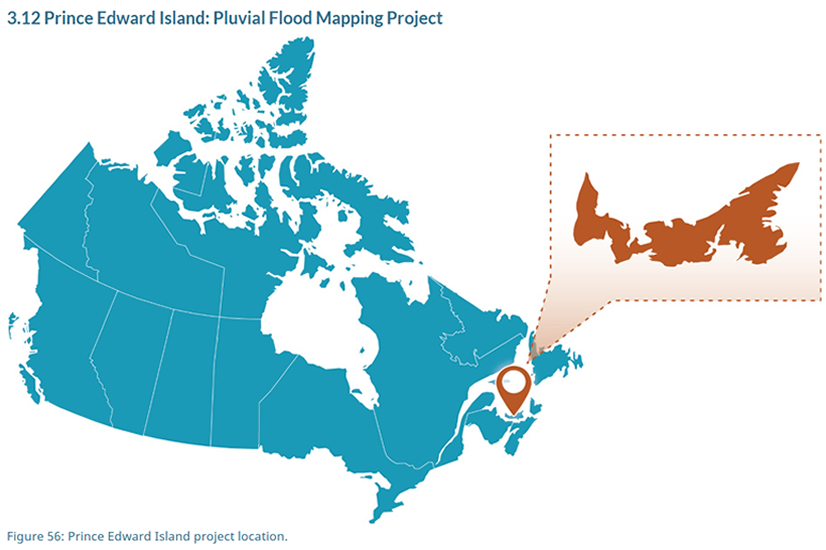
In this document, Climate Smart Lab’s pioneering work for PEI province-wide pluvial flood mapping is included as a case study. The details about this case study can be found at: https://natural-resources.canada.ca/science-data/science-research/natural-hazards/flood-mapping/case-studies-climate-change-flood-mapping#a312.

Here in the Climate Smart Lab, we are a group of people developing sustainable climate solutions with cutting-edge technologies to help build climate-resilient communities. Collectively, we are working together with experts from all disciplines to build a climate-smart future for the next generation and many generations to come.